
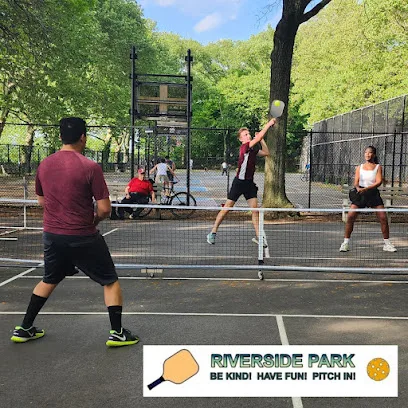
Quick overview of the courts
Riverside Park Pickleball Courts is a public outdoor setting in New York, NY with five regulation-size pickleball courts. The courts are maintained for consistent play, and the layout is designed for group rotation during open sessions. The location is especially convenient for visitors who want a park-style experience with a steady flow of players rather than a private club atmosphere.
Players arriving for the first time will notice a self rating sticker system used to match up with the right level. The stickers typically indicate where a player sits in the progression from beginner to intermediate, helping participants avoid pairing mismatches.
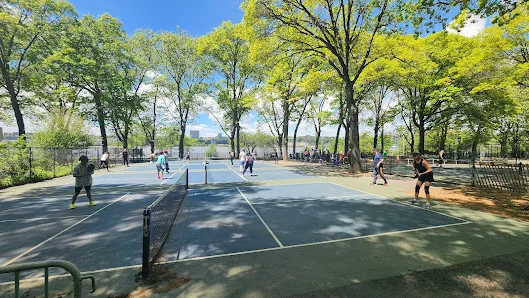
Court setup, surface, and how play is organized
The courts are marked for standard pickleball play and accommodate multi-game rotation. Because the courts are public and outdoors, the day-to-day feel can vary with weather and time of day, but the goal is consistent: clear lines, predictable boundaries, and enough court space for multiple matches at once. With five courts, groups can usually find open spots without long waits when the park is busy.
Riverside Park’s community organization is also reflected in how players decide matchups. The self-rating approach uses color-coded stickers to signal comfort levels. In practice, that helps beginners find rallies that are less punishing while intermediate players can target the pace they are comfortable with.
Who the courts are best for
This facility is a strong fit for a broad range of visitors. For beginner and beginner-plus players, the sticker system provides a simple way to find appropriate partners without having to guess skill level. Beginners often benefit from starting with shorter points and controlled rallies, especially when the session is moving quickly across multiple courts.
For intermediate players, the same sticker cues make it easier to locate partners who can handle faster drives and better placement. Because there are five courts, more than one game is typically running at the same time, so an intermediate visitor can often switch courts to find the tempo that matches their current game plan.
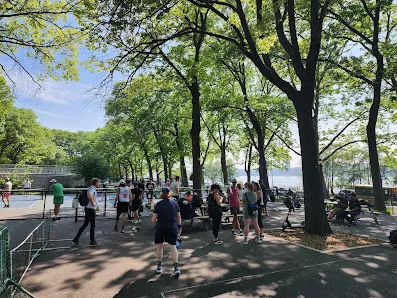
Lights, hours, and what to plan for
Because Riverside Park Pickleball Courts offers lights, evening play is possible when the park allows it. When visiting after work or on weekends, arriving with a little flexibility helps: outdoor facilities can change lighting conditions depending on season and park operations.
For the most accurate schedule, check the listing’s current court hours on arrival or confirm via directions at the park. If lights are on, plan to bring a safe, dependable setup for evening sessions (bright paddle face visibility and shoes with good traction).
Access, reservations, and drop-in expectations
Riverside Park Pickleball Courts is generally structured as drop-in, pay-per-play. That means visitors typically don’t need to be members to find games, and it’s usually possible to join based on current rotation. In busy periods, arriving early you get placed into a court faster.
If the session uses a reservation system or court rotation format, the on-site process is typically straightforward for newcomers. The key is to follow the flow at the courts—watch where open games are starting and look for the self-rating cue that matches your level.
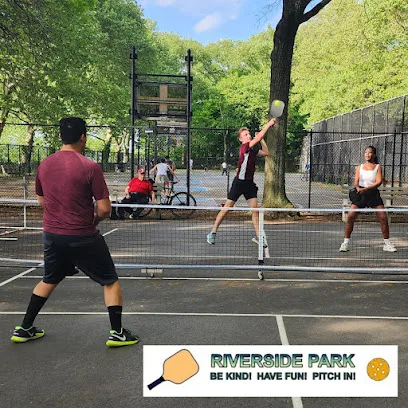
Fees, parking, and what to bring
Fees are typically pay-per-play, and the exact rate can vary by session timing and park operations. Players planning a longer session should arrive prepared to pay on arrival (or follow whatever method the courts are using at the time).
Parking is available nearby with free parking listed for the area. A good visitor checklist includes:
- Pickleball paddle (and a spare grip if you like)
- Comfortable outdoor shoes with traction
- Water, since outdoor play can run long in summer conditions
- Appropriate clothing for NYC weather (wind and sudden changes can affect ball flight)
- If needed, check whether paddle rental is offered during that session
For a smoother first visit, watch the rotation for a few minutes before stepping into a court. That quick scan often helps players choose the right level match and understand how the group keeps games moving across five courts.