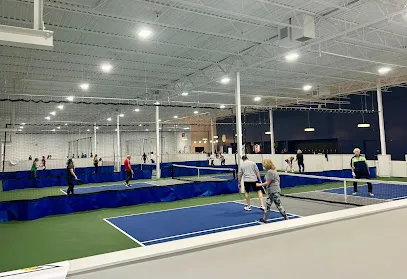
Choosing a public pickleball court is rarely about finding lines on a map—it’s about predicting whether the court setup will feel playable for your specific group, at your specific time. For Pickleball Courts at Foss Park, located at 49 Fellsway W, Somerville, MA 02145, the decision comes down to a few practical questions: how access is handled, what the lighting situation is for evening sessions, and how the space is managed when it’s shared with other park uses.
Start with access: what “public park” usually means on arrival
Public park pickleball spots can vary widely even when they’re all “open to play.” At Foss Park, treat the listing signals as a starting point, not a guarantee. The most important thing to verify is whether the courts operate as true drop-in play, whether there is a rotation or scheduling expectation, and whether anyone is managing turn-taking when multiple groups arrive.
Even if you plan to show up with good intentions, be ready for the real-world version of public access: players arriving in waves, informal queues, or periods when the courts are partially in use. If you’re going with a league group or a beginner cluster, it helps to confirm what you should do when courts are active—wait, rotate, or join a shared rotation.
Night play is a lighting decision, not just an “is it open?” question
If you’re thinking about an evening session, lighting becomes the hidden factor that can change everything from ball tracking to call accuracy. Foss Park is associated with lights for night play, which generally makes evening play possible, but it still pays to verify the practical outcome: are the lights strong and consistent across the playing area, and do they reduce glare for players?
On shared outdoor courts, lighting can also affect player behavior—some groups may arrive earlier to claim better visibility, while others may avoid late play if sightlines are inconsistent. For smooth games, consider timing your arrival so you’re not negotiating light levels mid-rally.
Shared / multi-use layouts can affect rotation and spacing
Another reality check for park courts is shared-use setup. Foss Park is commonly described as a shared / multi-use court environment. That matters because it can change how the area is used: court lines may be consistent for pickleball, but the surrounding space (sidelines, adjacent recreation areas, foot traffic) may not be quiet or dedicated.
For your session, this means you should plan for small “friction points.” Expect foot traffic near benches or sidelines, be thoughtful about where paddles and bags are placed, and keep warm-up routines compact so you don’t block others. If you’re playing with kids or first-timers, the shared environment is often manageable, but it’s still wise to set simple rules with your group before you start—where to stand, when to retrieve balls, and how to handle interruptions politely.
How to match the court to your group: beginners, leagues, and mix-play
Different groups “need” different court conditions. For beginners, the priority is usually predictable access and enough time to rotate without long waits. For a competitive group, the priority is court readiness—enough space to get into position, consistent visibility, and minimal interference from other users.
Before you commit, it’s worth checking the official path for the listing: https://pickleballsomerville.com/. Even when a website is the best source for local court details, remember to confirm what applies today: access model, current expectations for drop-in vs. any organized play, and any guidance that affects evenings or shared usage.
If your group includes both strong and developing players, consider a flexible format—shorter rotations, clearer “next up” expectations, and an agreement to keep games friendly when courts are busy. That approach reduces frustration in shared park conditions, where the best “strategy” is often just smooth coordination.
What to verify before you go (so you don’t waste the drive)
Because public-court rules can shift, the best decision-support checklist for Foss Park is simple and action-focused:
- Access: Is it genuinely drop-in, or is there a structured rotation/schedule at the court site?
- Evening play: Are lights on consistently, and is the visibility comfortable across courts?
- Shared-use impact: Are there times when other park activities crowd the area or affect rotation?
- Local coordination: If there’s an organizing site (like the official listing), confirm what it says for the day/time you plan to play.
When you confirm those details, you can walk into Foss Park with fewer surprises—so you spend your time playing pickleball, not solving logistics on the spot.