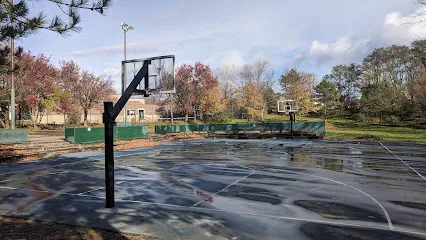
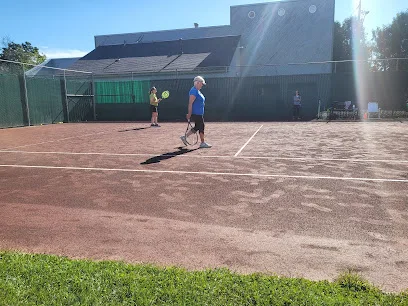
Elm Avenue Park’s pickleball courts are the kind of public-park setup where the best planning advantage is clarity: you want to know whether you’ll walk into smooth open play, or whether a rotation/reservation flow will reshape your whole session. For this venue, the local signals point to a shared, multi-use court environment, with lights enabling evening play and a “pay per play” style access signal. The address to use for your arrival is 239 Elm Ave, Delmar, NY 12054, United States—and public feedback for the listing shows a 5.0 rating from 1 reviewers.
Start with the “multi-use” reality: what it means for pickleball rotation
Because the park courts are listed as “shared / multi-use,” your session plan should assume that pickleball may share space or time with other activities. In practical terms, that usually means you should be ready for a paddle-style rotation (or any on-site winner/loser flow) if multiple groups show up. The goal is to avoid arriving at a fixed game start time and then waiting while another sport group finishes up.
If you’re playing doubles or coaching new players, treat the venue like a rotation-first environment: show up with enough warm-up time, have your partner(s) ready, and plan your duration so you’re not stuck with an awkward late arrival when the next group starts.
Lighting for night play: the only “schedule” you can trust without asking
Elm Avenue Park’s listing includes a lights-enabled signal for evening sessions. That’s an important decision factor because outdoor pickleball can become uncomfortable fast when daylight disappears—especially if you’re playing at a pace that requires clear visibility for serves, returns, and dinks. If you want night play, assume the light coverage will be your biggest practical constraint.
Before you commit, ask one direct question when you confirm availability: “Are the courts actually playable under lights through my full time window?” Even when lights are present, the usable hours can differ by season, staffing, or park rules.
Check how “pay per play” works on-site
The listing flags “pay per play” as an access signal. At public-park venues, that can mean anything from a simple drop-in fee collection to a payment method tied to a specific process. Because this can change, the decision-ready move is to verify the payment method and whether there’s any time-based pricing or caps on play.
Bring a backup: if your first payment method fails (cashless-only, card reader down, or QR code issues), you don’t want your session to end before it begins.
Open play vs. reservation: how to decide what to plan around
Public pickleball courts often run on a drop-in basis, but some parks add reservation blocks for leagues, maintenance, or special events. For Elm Avenue Park, the listing includes a “reservation system” signal. That means you should plan your day with a small assumption: even if walk-ons are possible, some time windows may be program-controlled.
The best approach is to think in two layers: (1) your ideal session, and (2) a backup plan if the court is partially reserved. If you’re traveling with a group, decide in advance what you’ll do if you arrive and see booked time slots—rotate, split into short sets, or adjust the start time.
What to bring for shared public courts (and what not to overpack)
For a shared outdoor-court environment, keep your kit simple and functional. You’ll likely need your own pickleball balls, because park courts typically don’t assume ball supplies for every visitor. You should also bring paddles that match outdoor conditions (grippy enough for longer rallies and wind) and a small towel or dry wipes, since shared areas can mean more foot traffic and surface debris than club courts.
If you’re bringing beginners, prioritize comfort over gear: fewer complicated accessories, clear ball communication, and a warm-up that doesn’t depend on uninterrupted court time.
How to confirm the last 10%: three questions worth calling/emailing
Because public-park court details can vary by season, use a short “confirm loop” before you go. Ask:
1) “Are the courts available for drop-in during my planned arrival time, or should I reserve?”
2) “Do lights stay on long enough for an uninterrupted evening session?”
3) “Is there any on-site check-in/payment process for pay-per-play access?”
With those answers, you’ll know whether Elm Avenue Park supports your preferred pickleball flow—open-play rotation for casual sessions, or reservation-aligned timing if you’re aiming for a coordinated group.