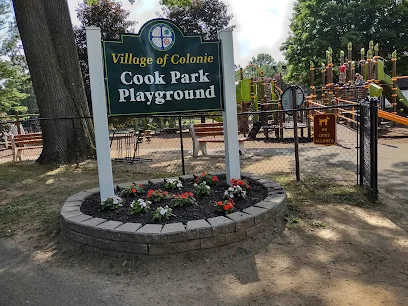
If you’re planning a pickleball session at Cook Park in Colonie, the smarter question isn’t “Is it outdoors?”—it’s how the courts behave when they’re shared. Cook Park shows up as a public park courts option, with signals like a 4.7 rating from 694 reviewers, and it’s tied to the Village of Colonie’s recreation system. That context matters because it affects what you should confirm: open play rules, how evening play works, and what “shared” really means once people arrive.
Start with the court-flow question: open play or rotation?
Public park courts can look simple on a listing, but pickleball is timing-heavy. Before you commit to a specific arrival time, plan to confirm what “open play” means on-site. In practice, you’re looking for two things: whether the courts are treated like drop-in open play, and whether there’s an informal rotation pattern when multiple groups show up.
Because this is a shared / multi-use setting, the cleanest way to judge fit is to ask how new players are integrated when courts are already in use. If you prefer steady drilling or consistent partners, you may want to plan around less-busy windows.
Lighting decides your success rate for evening pickleball
Cook Park’s signals include lights for night play, and that’s a big deal in pickleball because the smallest visibility issue can change your reaction time. If you’re scheduling after work, don’t assume “there are lights” means “they’re enough for fast rallies.” Instead, use the first 10 minutes on arrival to check how the lighting falls across the playing area and where shadows collect.
Even if night sessions are technically possible, the practical question is whether visibility is uniform across both sides. If one area is noticeably darker, you may have to adjust where you stand during serves and returns.
Know the address and the contact loop before you travel
For planning, build your decision around the hard logistics. Cook Park is referenced at Shambrook Pkwy, Colonie, NY 12205, United States, with a listed phone number +1 518-218-7782 and an official site link at http://www.colonievillage.org/. Use that contact loop when you need a fast, current answer—especially if you’re trying to figure out whether conditions are normal (or if the courts are temporarily limited).
One useful tactic: call before you leave rather than while you’re already on the way. Court access rules can vary by season and day, and it’s faster to confirm the current situation than to gamble your full ride on an outdated assumption.
Bring the right gear for a park setting
Because this is a public courts environment, you should assume your session depends partly on what’s available at the moment. The listing signals “paddle rental” and a reservation system, but the key is to confirm how that works for your specific day and time window. If you rely on rental paddles, ask whether they’re available during your target hours.
Also plan for the “park reality” that can affect play: shared spaces around the courts and family activity nearby. That doesn’t make it bad for pickleball—it just means you should arrive ready to adapt your timing, warm-up, and rotation expectations.
How to decide if Cook Park fits your goals
Choose Cook Park if your priorities align with public court flexibility: casual open play, evening options where lighting supports rallies, and a shared setting where you’re comfortable rotating in and out. If your top goal is uninterrupted play with minimal waiting, your best move is to verify court-flow expectations first.
Bottom line: treat the strongest public signals—4.7 from 694 reviewers, the address at Shambrook Pkwy, and the Village of Colonie contact path—as your starting point. Then confirm open play rules and night lighting conditions on the day you plan to go. That two-step approach makes your time on court more predictable, and it helps you avoid the common frustration of “it looked like open play online.”