
There’s a lot of new numbers being thrown at you in these data tables and I wanted to walk through the process I typically use to research horses using the tool. This isn’t the only way to use it, just the most common workflow I go through when looking for a breeding partner or a new horse to purchase.
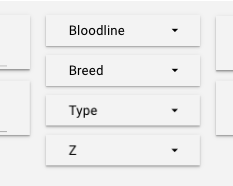
Step 1: Start by filtering for your desired horse trait filters. Z range, breeds, bloodlines, sex, etc.
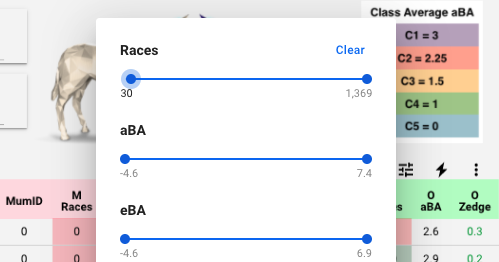
Step 2: Use the race filter to remove low sample horses. There isn’t a “right” number but I usually choose somewhere between 20 and 50.
Step 3: Sort by aBA. This gives you a list of the highest base ability horses based on your filters above. Even with your race filter, keep an eye on race counts.
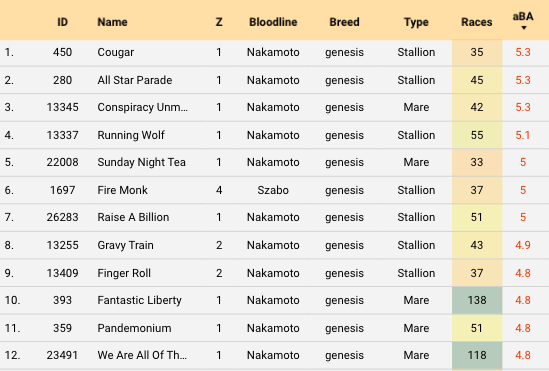
In the example above, Fantastic Liberty and We Are All Of The Stars are lower on the list but have huge samples making their numbers the “realest.” I typically use the first 100 race horse as the true high end BA for the set of horses I’ve filtered for. I’d treat 4.8 as the highest aBA and assume the horses listed above that would regress towards that number over time. They MAY be better, but odds are they aren’t.
Step 4: Look for corroborating evidence. Look for horses with high offspring race count or a parent that also point to high BA. We’re looking at Genesis in this example so we have no parent data, but we do have 2 horses with really high offspring race counts and one with a decent sample. Of these, Running Wolf has the best O-Zedge score, which jives with his high aBA.

Step 5: If you find a horse with high aBA but low offspring Zedge, both with decent race counts, put the horse in the momID or DadID filter which will show you all of their foals and the other parents BA. Remember to clear all filters (horse traits and race count) so you’re looking at all of the foals. Sort those by race count to see who’s influencing the offspring score the most. Raise a Billion, in the example above, is a good example. Very good aBA and a strongly negative O Zedge. Let’s dig deeper.
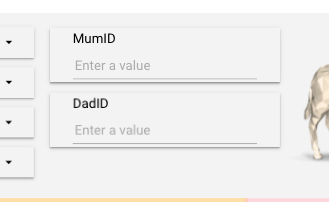
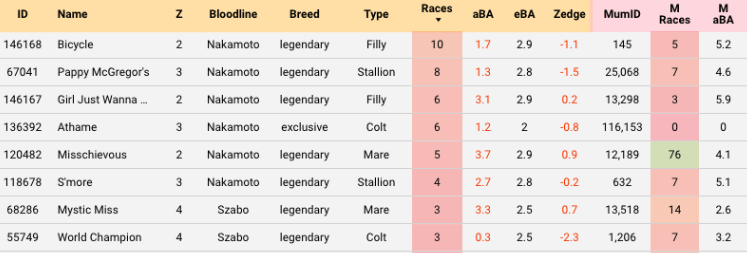
Above, we can see most of Raise a Billions dam partners or offspring have very small race counts. Safe to say his bad O-Zedge score is still noisy and will likely improve as his foals are raced more.
Step 6: Repeat the previous 5 steps, but instead of filtering on race count, filter on offspring race count. I’d use a larger number than you did for just the single horse, typically 100+. Then sort the data by O Zedge. Now we’re looking for horses who may not have met our race threshold themselves, but that have strong enough offspring data in large sample to be worthy of consideration. As we did previously, look for evidence in the parents data to support the high O-Zedge. Then, put any horses of interest in the Mum/Dad ID and look at the foals/opposite parent to make sure the data ‘makes sense.” It’s more important to do this step when you’re only relying on offspring data. In certain cases, one race dominant foal from a strong/weak opposite parent can skew this metric considerably.
